

.svg)
.png)

Hearst is a US-based global media, information, and technology company whose publishing reaches millions of readers across print and digital.
The results
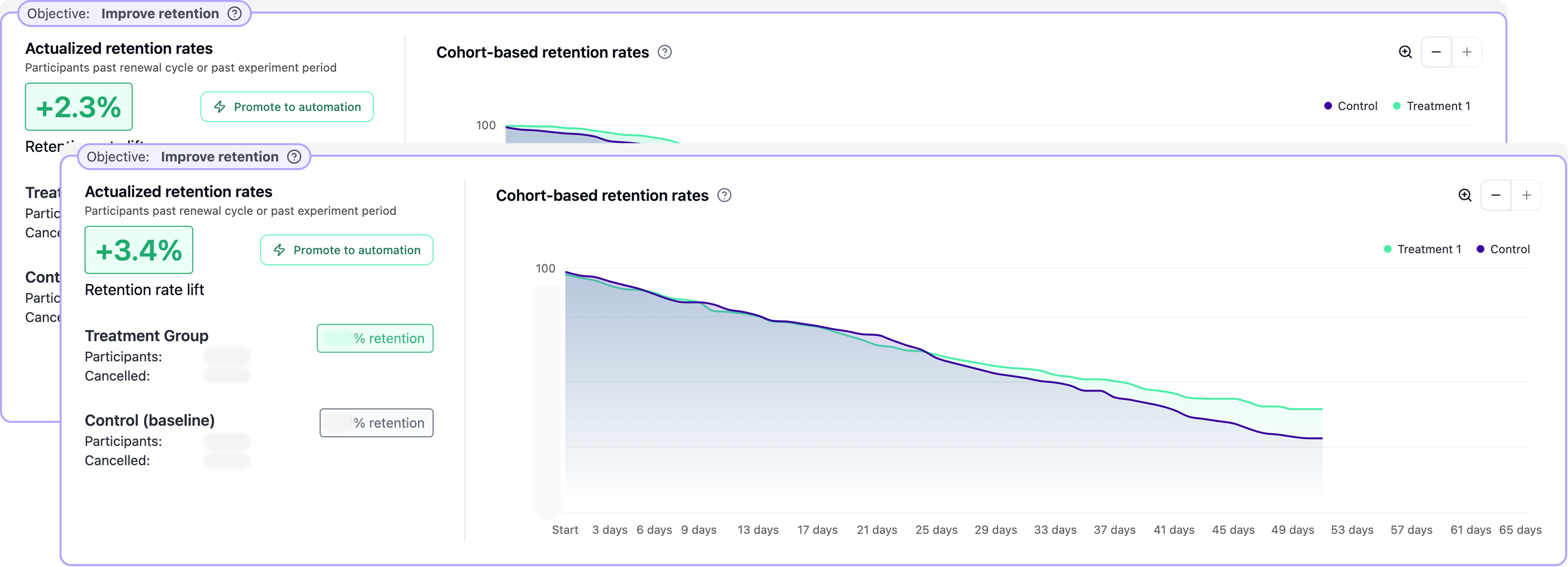
Hearst used Subsets to identify subscribers who were behaving like others who had previously churned at the same point in their subscription, then tested whether reaching them proactively, before the churn happened, could change the outcome. The same experiment ran in two markets:
- +3.4 percentage point retention rate lift in Times Union
- +2.3 percentage point retention rate lift in Houston Chronicle
The challenge
Hearst was seeing high churn among subscribers transitioning from introductory pricing to the full rate but couldn't reliably identify in advance which subscribers were at risk. Without a way to flag them before the price step-up, the retention team had no window to intervene before a subscriber had already decided to cancel. As Hearst operates across multiple markets, the team also needed to see results for each market separately, rather than as one blended figure.
The solution
Subsets’ machine learning identified subscribers who were behaving like those who had previously churned at the same point in their subscription, giving the Hearst team a high-risk audience to reach before the price step-up.
Hearst used Subsets to:
- Create behavioral lookalike audiences of current subscribers showing the same early signs of disengagement for each market.
- Test a proactive re-engagement email series for the treatment group ahead of the price change.
- Track retention automatically for each treatment group vs control.
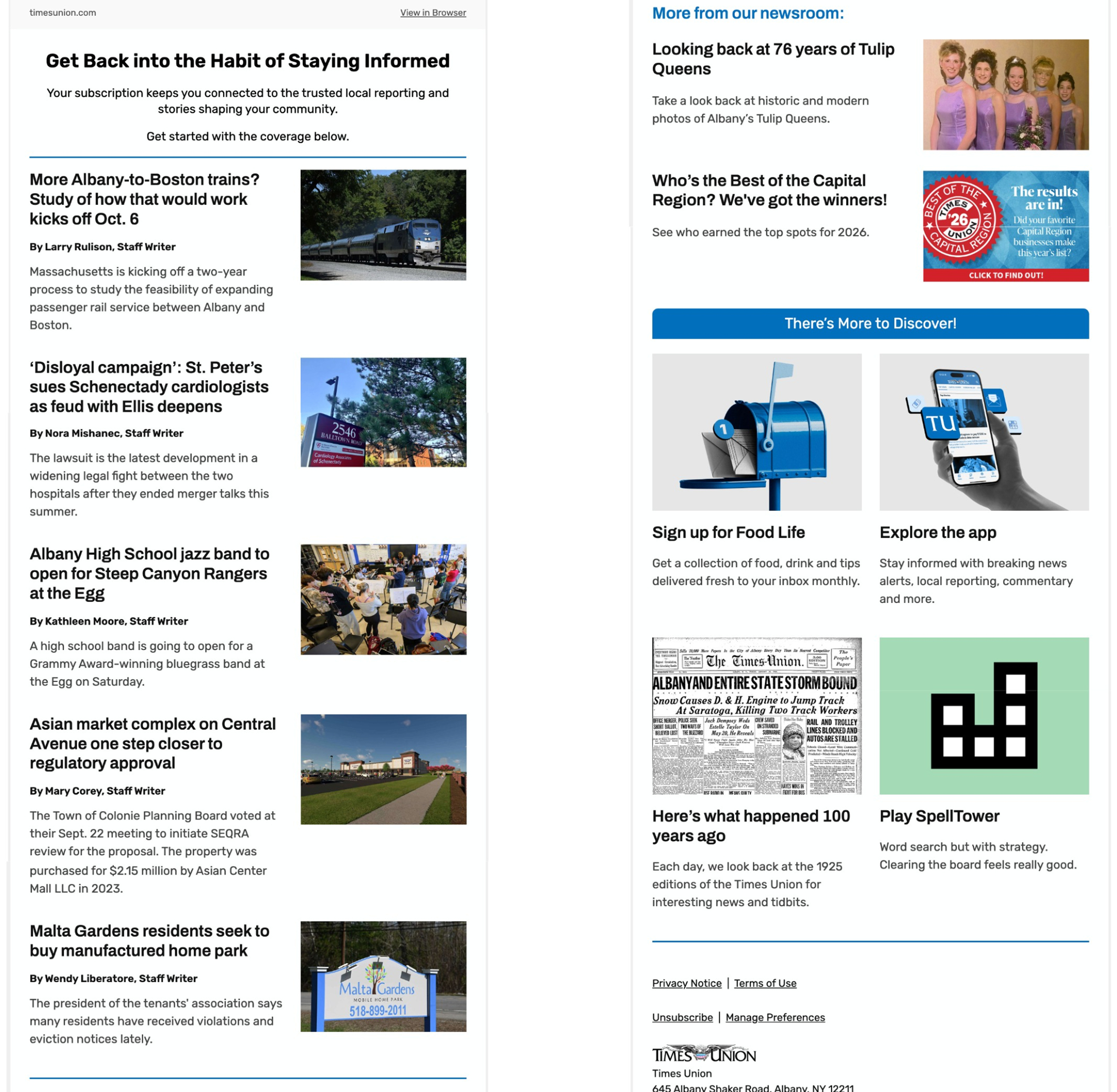
The treatment groups received a weekly email featuring a curated selection of the week’s top stories, alongside a section promoting other subscription benefits. See example for one of the markets:
No items found.